


The Paradox of Modern Musicking: Ultimate Proof, Ultimate Loss
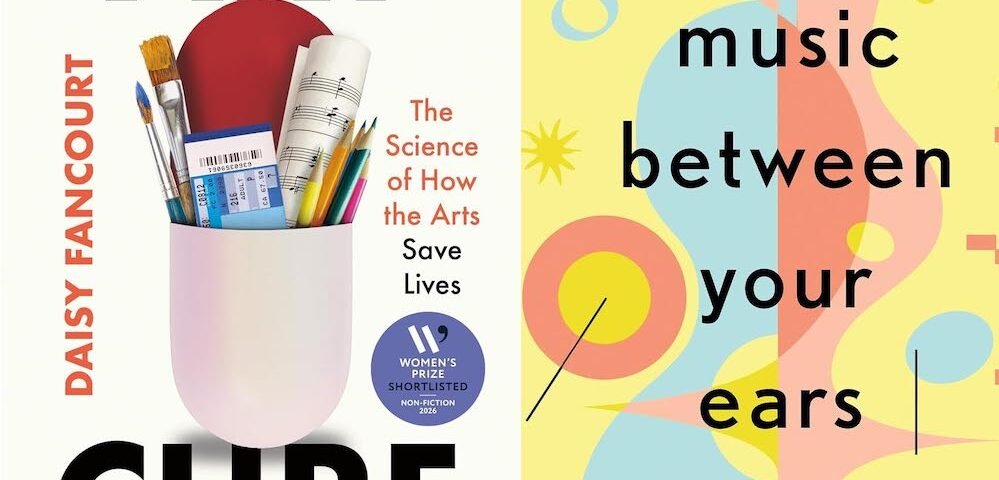
There have been two very interesting books released recently, that I don’t want to wait to write about until my annual music books evaluation. Mainly because these two books are very much relevant to what Musicably is about. I hope you will find them as fascinating as I have.
We live in a fascinating, yet deeply concerning cultural moment. If you look at the cutting edge of medical, psychological, and neurological research, science is finally delivering ironclad, data-driven proof of something we have felt intuitively for generations: creative expression – and music in particular – is a core driver of human evolution and a fundamental pillar of our daily physical and mental wellbeing.
Two major books have recently arrived on the global stage to solidify this case. The first is Dr. Samuel Markind’s Music Between Your Ears: How Musical Engagement Powers the Human Brain (Johns Hopkins University Press), which gives us an incredibly detailed, microscopic look at our inner workings. The second is Professor Daisy Fancourt’s Art Cure: The Science of How the Arts Transform Our Health (Cornerstone/Penguin), which takes a macroscopic, population-level look at how creative engagement determines how well and how long we live.
The science is settled, the data is staggering, and the proof is overwhelming. Yet, precisely because of the way our modern world is structured, we are at the highest risk of losing the very evolutionary benefits these scientists have managed to document. These books are not just dry collections of academic papers; they are fascinating, deeply engaging narratives that serve as an urgent warning for our time. Every person who loves music, values their health, or cares about the future of human creativity needs to understand what these authors have uncovered.
The Microscope: How Music Shapes Our Mind
Dr. Samuel Markind’s Music Between Your Ears explores the intriguing relationship between our grey matter and the melodies we love. What makes Markind’s writing so accessible and attractive is that he doesn’t treat the human mind like an isolated machine. Instead, he blends cutting-edge neurology with vibrant stories featuring everyone from classical masters like Aaron Copland and George Gershwin to the infectious rhythms of modern Korean pop music.
One of Markind’s central goals is to explain exactly how our brains are instinctively wired for sound. He demonstrates that from the moment we are born, infants have a natural affinity for rhythm and melody, using it to bond with caregivers long before they understand the meaning of spoken words. Music, in essence, is our first language.
However, the real core of Markind’s research lies in the profound biological difference between simply listening to a song and actively participating in it. To explain this, he looks at two fundamental concepts, translating complex science into ideas we can all visualize:
- Synapses (The Brain’s Communication Lines): Think of your brain cells as a massive network of islands. Synapses are the microscopic gaps between these cells where chemical and electrical messages jump from one island to the next. When you passively listen to a playlist, a small, specific pathway of these communication lines lights up. It is pleasant, but localized.
- Neuroplasticity (The Brain’s Ability to Rewire): This is the brain’s incredible capacity to physically reshape, grow, and build new pathways throughout your entire life. Markind reveals that the moment you actively engage with music – whether you are singing along, tapping a complex counter-rhythm on your desk, or learning a simple instrument like the ukulele – a neurological firework show begins.
Because active music-making requires you to coordinate your ears, your hands, your eyes, and your emotions all at once, it forces different areas of the brain to communicate deeply. This intense mental workout builds a robust “cognitive reserve.” Like a forest with multiple pathways, if one trail becomes blocked due to aging, injury, or illness, an actively musical brain has already built alternative routes to keep memory, speech, and movement flowing smoothly. Markind proves that active participation is the ultimate insurance policy for your mind.
The Telescope: The “Fifth Pillar” of Public Health
While Markind explores individual brain pathways, Professor Daisy Fancourt zooms out to look at the big picture. As an award-winning scientist and director at the World Health Organization’s Collaborating Centre for Arts and Health, Fancourt has spent decades studying how creative behaviors affect tens of thousands of lives. Her book, Art Cure, acts as a sweeping, inspiring manifesto that positions the arts not as an elite luxury, but as an essential resource for human survival.
What makes Art Cure an absolute page-turner is the way Fancourt pairs massive clinical data with deeply emotional, real-life human stories. For example, she shares the journey of Josh, a young man who regained significant hand and arm function after cerebral palsy left him partially paralyzed. His breakthrough didn’t come from traditional, repetitive physical therapy alone; it came through a specialized, creative program designed by clinicians and magicians that turned his rehabilitation into an act of artistic mastery.
Fancourt uses these moving case studies to illustrate a profound truth: human expression has a direct, measurable impact on our biological defense systems. She introduces a concept that everyone should know:
- The Neuroimmunological Shift: This is just a scientific way of describing how your thoughts, emotions, and creative actions directly change your physical body chemistry. Fancourt’s epidemiological data proves that regular engagement with creative activities triggers an immediate biological shift. It rapidly drops your levels of cortisol (the primary hormone responsible for chronic stress) and simultaneously improves your body’s immune markers while reducing systemic inflammation.
Because of this powerful biological response, Fancourt makes a brilliant and bold proposition: we must stop viewing art as mere entertainment. Instead, she argues that creative expression deserves to be recognized as the “forgotten fifth pillar of health,” standing with equal weight alongside diet, sleep, exercise, and time spent in nature. Her large-scale data reveals a staggering fact: communities and individuals who regularly weave creative expression into their lives quite literally outlive those who do not.
The Great Modern Paradox: Abundance vs. Isolation
When you read these two books side by side, a beautiful, airtight case emerges. Markind proves how our individual minds are wired to be transformed by music, and Fancourt proves that this transformation keeps entire populations alive, healthy, and resilient. They give us the ultimate scientific validation for the healing power of human creativity.
Yet, this brings us face-to-face with the dangerous paradox of our modern lifestyle.
We currently live in an era where we are absolutely bathed in music. Through our smartphones and streaming applications, we have instant, uninterrupted access to almost every piece of music ever recorded in human history. We can consume it while driving, working, cooking, or falling asleep. On paper, we are the most “musical” civilization to ever walk the earth.
But in reality, we are starving in the midst of plenty.
Because of the sheer speed of modern living and the overwhelming dominance of digital media, our relationship with music has been quietly, systematically commercialized. Streaming algorithms are designed to keep us pacified and passive. They curate perfect, seamless background soundtracks for our lives, turning an active, vibrant human technology into a mere consumer commodity.
Worse still, our modern culture has corporate-designed the myth of artistic elitism. We have been conditioned to believe that music-making belongs exclusively to professionals on a screen or a stage, while the rest of us are relegated to the role of passive observers. We are told, implicitly or explicitly, that if we cannot sing perfectly in tune or play an instrument with flawless, professional technique, we shouldn’t bother trying at all.
What Happens When the Spectator Wins?
This shift from active creators to passive spectators is not just a harmless change in entertainment preferences; it is a profound evolutionary threat.
For tens of thousands of years, long before the invention of recording devices, music was something humans did. It was a communal, participatory event. Our ancestors didn’t sit silently in a dark room listening to a distant performer; they stamped their feet, clapped their hands, sang together around fires, and used rhythm to coordinate their movements, build social trust, and soothe their children.
Our biological systems evolved to expect this active participation. When we outsource our natural creative impulse to an application or a piece of media, we break that ancient evolutionary loop. The steep biological costs of this passivity are precisely what Markind and Fancourt’s data implicitly warn us about:
- We lose our natural stress-regulation mechanics: Passive consumption does not trigger the same deep neuroimmunological reset as active expression. By remaining silent observers, we forfeit a built-in, accessible tool designed to naturally lower our chronic stress and protect our bodies from inflammation.
- We accelerate cognitive vulnerability: When we let an algorithm do the heavy lifting, we miss out on the profound, full-brain cross-talk that builds structural brain resilience. We leave our minds more vulnerable to the natural wear and tear of aging.
- We alienate ourselves from our own humanity: We trade a primal, empowering tool for personal well-being for a passive, digital aesthetic. We allow convenience to slowly erode the very creative behaviors that helped shape the human species.
Reclaiming Your Creative Birthright
This is exactly why Music Between Your Ears and Art Cure are such incredibly important books for our current cultural moment. They should not be read merely as interesting scientific updates, but as an intellectual rallying cry to protect our creative lives from being completely pacified by modern media.
Both authors make it beautifully clear that your brain and your body do not care about perfection. Your cellular pathways do not scale their response based on how many records you’ve sold or how flawless your pitch is. They only care about one thing: your active engagement. The simple act of humming a melody, drumming your fingers in time with a complex beat, or singing softly to yourself provides the exact biological rewards that keep us vibrant, healthy, and human.
If we want to protect our well-being in a digital age, we have to reclaim music as a verb – an action we perform, not just a product we buy. These two masterworks give us the exact scientific armour we need to step away from the passive scroll, push back against the myth of elitism, and confidently make our own waves. Pick them up, read them, and let their findings inspire you to switch off the background noise and start actively musicking today.
