


Music Is Not an Olympic Sport
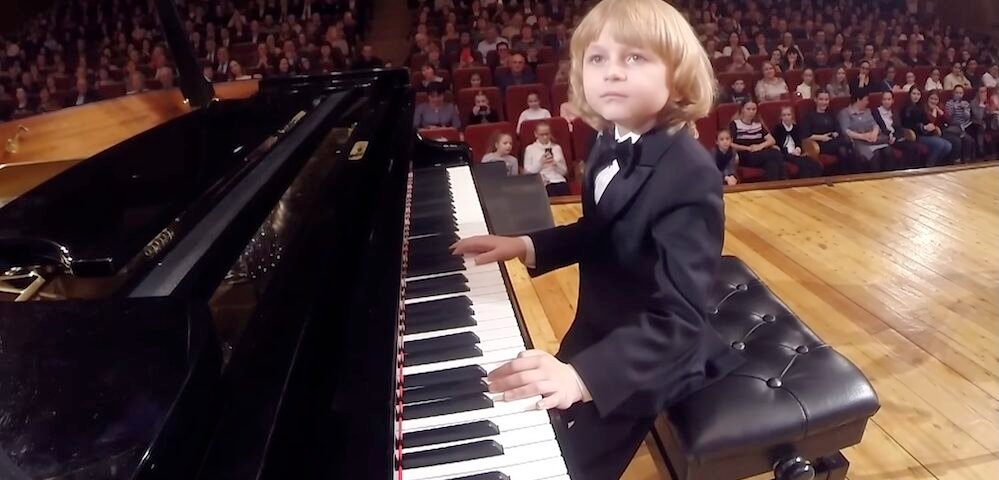
A few days ago a video landed in my feed. A nine-year-old boy, Elisey Mysin, sitting at a grand piano in a full tuxedo, a professional orchestra behind him, playing Mozart’s Piano Concerto No. 3. His hands moved like he’d been born knowing where the keys were.
The comments were what you’d expect. “A true genius.” “Mozart reincarnated.” “I’m forty and can’t play two notes.”
I watched it twice. And what I felt wasn’t awe. It was something closer to discomfort. Almost sorrow, if I’m honest. Here was a child performing at a level built for concert stages and competition juries, and all I could think was: what is this doing to him?
The Spectator Trap
Try applying the same standard to anything else in life. You wouldn’t skip your morning walk because you’re not an Olympic sprinter. You wouldn’t stop cooking dinner for your family because you’re not running a Michelin kitchen. Walking and cooking are just things people do. Nobody needs a license.
Music used to work the same way. Somewhere along the line we turned it into a spectator sport instead. We watch nine-year-olds do extraordinary things with their hands, we marvel, and without meaning to, we absorb the quiet message underneath it: unless you can do this, don’t bother.
That message is wrong. But to understand why, it’s worth looking at both ends of what we call giftedness.
Two Sides of the Same Coin
If Mozart were a child today, I doubt he’d be allowed to become Mozart. A boy that intense, that singularly focused, restless in ordinary classrooms and impossible to distract from the harpsichord, would very likely be handed a diagnosis and a prescription before anyone let him finish a concerto. We’ve built systems that flatten the very traits that used to produce people like him.
And then there’s the other end. Science writer David Robson recently pulled together decades of research on what actually happens to gifted children once the cameras stop rolling, drawing on long-term data out of Vanderbilt’s Study of Mathematically Precocious Youth. The story is more sobering than the viral clips suggest. Raw talent on its own doesn’t predict a happy or fulfilled adult life. What predicts it is a rare combination: high intelligence, high emotional stability, and real conscientiousness together, something researchers estimate applies to well under one percent of people. Early acceleration helps careers, but it also installs a kind of permanent pressure to keep performing. Many gifted kids grow into ordinary adult lives and quietly grieve the version of themselves everyone once applauded.
So watching Elisey Mysin, I don’t see a genetic lottery winner. I see a child who has been placed on a pedestal built by adults, for an audience of adults, and I wonder who is asking him what he actually wants from a piano.
You Don’t Need to Be Born With It
Here’s the part that actually matters for the rest of us. You don’t need a rare brain to get the real benefits of making music. Neuroscientists Simone Herholz and Robert Zatorre have shown that the brain changes we associate with musicians aren’t something you’re born with. They’re something you build. The moment you make sound on purpose, your brain starts wiring new connections between hearing and movement, whatever your age, whatever your starting point.
Your nervous system doesn’t check your resume before it responds to music. It doesn’t care if you’re playing a Mozart concerto or just tapping out a rhythm on the kitchen table. Making sound is the trigger, not talent.
Musicking Is Not a Test You Pass
I’ve spent a long time thinking about the difference between watching music and making it, what I call musicking. It isn’t a discipline you master or a skill you earn the right to enjoy. It’s just something you do, the way you hum in the shower or tap your foot at a red light.
That matters because musicking on your own, just you and a guitar, a drum, your own voice, is already whole. It doesn’t need an audience to count. It doesn’t need to lead anywhere else. Sitting alone and making a sound you like is the entire point, not a warm-up for something bigger.
And when you do make music with others, something else happens. Heart rates and brainwaves start to sync up. It’s one of the oldest ways humans have found to feel less alone. But that’s a bonus, not the requirement.
What making music on purpose actually does, in plain terms:
For your mind. It sharpens memory and mental flexibility, and it pulls you into a state of flow where the noise in your head goes quiet for a while.
For your body. Singing and breath control slow your heart rate. Rhythm loosens tension and keeps your hands and fingers agile as you age.
For your relationships. Making sound with another person, even just humming along together, builds a kind of closeness that scrolling never will.
For everything words can’t reach. Music gives shape to feelings that don’t fit into sentences. Grief, joy, longing. It’s one of the only tools we have for that.
Put the Phone Down
Next time a video like Elisey’s shows up on your screen, admire the work that went into it if you want. But don’t mistake it for the point of music. That’s a display of technical extremes performed for an audience. It has almost nothing to do with what music is actually for.
You don’t need a tuxedo. You don’t need a concert hall. You don’t need a childhood spent under a spotlight, and you certainly don’t need to have been born gifted. You need exactly one thing: the willingness to make a sound and not worry about whether it’s good.
Put the phone down. Hum something. Tap a rhythm on your desk. Step off the sidelines and make some noise of your own.
