


3,400 Strangers Who All Wanted to Be Alone – And Found Each Other Anyway
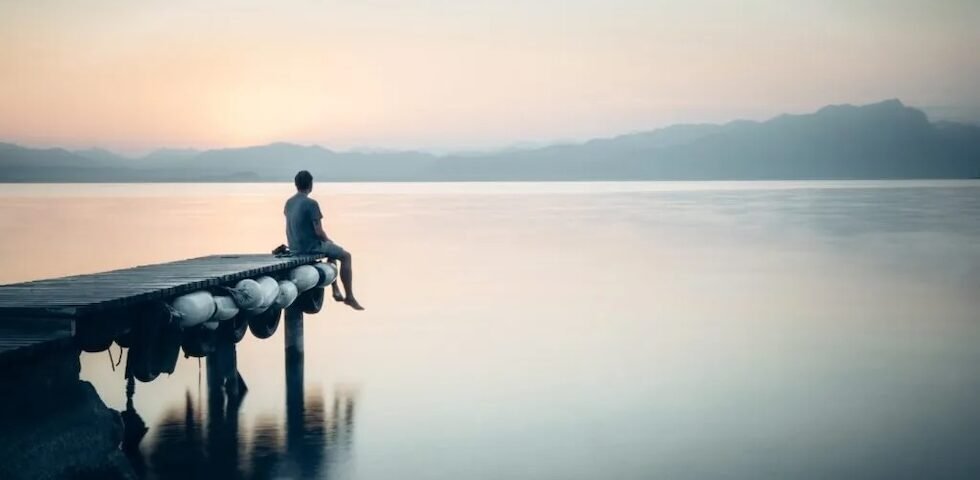
A few weeks ago I was watching a YouTube video about isolation. The speaker, Jacob Whelan, was arguing that choosing to step back from social life is not failure but something closer to wisdom – a hardwired response to a world that has become too noisy, too performative, too draining to sustain. His argument was calm. The visual language was hushed. The whole thing was built to feel like a permission slip for people who are tired.
The comment section had over 3,400 replies.
One had 1,400 likes: “I’ve been in isolation for over 20 years and I’m quite happy with it. The second you step out you quickly realize that EVERYTHING IS A SCAM AND FEW TELL THE TRUTH ANYMORE. Stay home, it’s the only thing you can call your own today.”
Then: “Better to be alone than in bad company.”
Then, with 528 likes: “Most people are so draining and irritating. After any interaction with them you have to go through an extensive recovery process.”
And the one I kept returning to, with 165 hearts: “I found a group of isolationists, how ironic lol.”
I sat with those for a long time.
Read those first three comments again, but not for the sentiment. Read them for the verbs. Stay. Choose. Recover. These are not the words of someone at rest. They are the words of someone who has been acted upon, and who has decided – carefully, deliberately – to stop.
Whelan is not entirely wrong. The social world those commenters are retreating from is genuinely costly. It asks you to perform, to manage yourself into a version the room can handle, to pay with energy that does not come back. If that is what contact means, then stepping away is not weakness. It is a reasonable decision.
But read the comments one more time, and notice what they are actually describing. They are not describing a love of silence. They are describing exhaustion with a specific kind of contact – the transactional kind, the evaluative kind, the kind where you leave more depleted than you arrived. They are not saying they want to be alone. They are saying the version of “together” they have been offered is not worth the price.
That distinction is everything.
The kind of contact they are reaching for – without knowing it – is what I call musicking: active music-making, the doing rather than the receiving. Not a playlist. Not headphones on a subway. The thing that happens when you pick up an instrument, or open your mouth, or find yourself tapping a rhythm on a table without quite deciding to.
When you make music alone – truly alone, no audience, no phone, no one watching – you do not enter isolation. You enter a different kind of company.
The first companion is your own body. The breath, the hum that rises before you have decided to make a sound, the rhythm already moving in you. You have been carrying this instrument your entire life without needing anyone’s permission to use it. When you give it voice, however small, however private, you are more present to yourself than in almost any other act.
Then the space around you joins in. A kitchen has its own acoustic character. A bathroom gives you back a note that is slightly warmer, slightly longer than the one you offered it. A forest returns your sound changed – absorbed somewhere, reflected somewhere else, the trees doing something to it you could not have planned. The room is not a neutral container. It is a participant. When you make a sound in a space, the space answers, and that is already a conversation.
Then come the people who are not in the room. Every melody you know came from someone. Every rhythm has human hands somewhere in its history. When you hum something your grandmother used to sing, she is in the room.
When I play something rooted in a tradition older than myself, everyone who ever played it is somewhere in the sound. And if you are holding an instrument, someone made it – shaped that wood, stretched that string, tuned that resonance. Their hands are present in yours in a way that is not metaphor. The music carries all of this, even when we forget.
And then there is what I think of as the imagined witness – the one nobody talks about. When we make music alone, we still organize the sound for someone. We phrase differently than we would into a complete void. That witness is real even when invisible. It might be your future self, the person your hands are slowly becoming through the practice you are building today. But you are never, when you are making music, playing into nothing.
This is what separates musicking from both isolation and the exhausting contact those 3,400 people are fleeing. There is no performance frame. The instrument does not grade you. The room does not sigh at your mistakes. But you are not alone either, because the activity itself is the relationship – with your body, with the space that answers back, with the tradition behind you, with the hands that built what you are holding, with the witness that is always somehow there.
Someone in that comment section called what they were looking for “unreviewed contact.” I think that is exactly right. No editing yourself into a version the room can handle. No smile that costs something. Just the sound, and the next sound, and the space between them that belongs entirely to you.
I want to go back to that comment one more time. “I found a group of isolationists, how ironic lol.”
The poster is laughing. The poster is also in a group. They went looking for permission to be alone and found, at the bottom of a comment section about solitude, people who were not draining, not transactional, not asking them to perform. People who were, in that one moment, simply there. Saying: me too.
The 3,400 commenters are not failures at being alone. They are successes at being lonely – and those are not the same thing. What they found in that comment section is real, and I do not want to minimize it. But it is also a fairly crude technology for what they were actually after: witness without cost, company without performance.
Musicking is a finer technology for the same thing. It does not need a screen or an account or anyone’s approval. It needs a body – which you already have – and a willingness to make a sound in the room you are already in.
Most people start with solo musicking, and some need to spend a long time there, finding their own sound, learning what the body does when nobody is evaluating it. There is nothing to rush. But I want to say one more thing, because I think it matters. Music was never designed to insulate. Its nature is resonance. And resonance, by definition, does not stay in one direction forever. What begins as sound in a room eventually wants to meet another room. That is not a prescription. It is simply what music does, when you let it.
The same I found my people is available through musicking. It does not need a comment section. Your kitchen already knows your voice.
Music is a birthright, not a talent.
You were issued a body. The body makes sound. It has been doing this your whole life. The only question is whether you let it do so on purpose.
This episode is also available as a podcast. Listen on Spotify — or find the full Musicably podcast archive, including Apple, Amazon, and YouTube — at Musicably Podcast.
Photo: Internet
