


The Song Factory’s Real Product Is Your Silence
Picture a Tuesday morning in Nashville, USA. A songwriter arrives at a publishing office on Music Row (a historic district, serving as the heart of the country music industry since 1950s) and sits across from someone they have never met. They exchange a few words. One of them opens a laptop. By 2 PM, they are contractually expected to have produced a finished song – or at least a working hook – something the publisher can pitch. They are not waiting for a muse; they are meeting a quota. Then both of them move on to their next appointment.
This is not a bad day. This is the job. In major music hubs like Nashville, London, or Soul, the “staff writer” system operates with the cold efficiency of a 1920s textile mill.
Not all music works this way. Some of it still begins in the way you imagine: late at night, alone, with something urgent to say. But a significant portion of what lands on your curated playlist was manufactured in scheduled sessions, by people under quota, working off a debt they may never fully repay. And the system that produces it was designed not only to extract value from those songwriters, but to extract something from you as well.
The Mechanics of the Factory
To understand what is happening, you need to know what a staff songwriter’s contract actually says. The industry calls it an Exclusive Songwriting Agreement, and its terms are documented by BMI and the Nashville Songwriters Association International.
Here is what it looks like in practice.
A young writer gets signed to a publisher. They receive what the industry calls a “draw” – a monthly payment that functions like a salary. Except it is not a salary. Every dollar of that draw is an advance against future royalties. The writer will not see a single penny of royalty income until the publisher has recouped the full amount, plus the cost of recording professional demos. A modest draw of $30,000 a year sounds like a lifeline. It is also a clock, ticking against every song that writer produces.
Now add the quota. A standard contract requires the delivery of ten to fifteen songs per year. That number sounds manageable until you understand how co-writing is counted. In modern Nashville, virtually no song is written alone. Songs are split between two, three, sometimes four writers. Co-write a song with two other people, and you receive credit for one third of a song toward your quota. To deliver fifteen songs under that system, a writer may need to co-write forty-five to fifty songs in a calendar year.
Forty-five to fifty songs. Each one written with a stranger, in a four-hour block, on schedule, whether inspiration has arrived or not.
This is where the 10-to-2 session was born. It is not a cultural quirk of Nashville. It is a mathematical necessity imposed by the contract. Show up at ten. Produce something by two. Move to the next appointment. Repeat. And when the writer’s contract ends? The publisher keeps the songs – typically for the life of the copyright, which under current law extends seventy years beyond the writer’s death. The writer moves on. The factory keeps every melody that person ever bled onto a page. The factory does not lose. It was designed that way.
When the Factory Discovered It Could Go Cheaper
Here is where the story gets darker, because everything above describes a system that still required human beings.
In 2024, the Swedish newspaper Dagens Nyheter published an investigation that identified a single composer, Johan Röhr, as the person behind 656 different artist names on Spotify. His music – released under aliases with invented names and fabricated identities – had been streamed over fifteen billion times. Many of those tracks were placed directly onto official Spotify “Focus” and “Mood” playlists: Stress Relief, Deep Focus, Ambient Study. This allowed the platform to fill its most-visited playlists with music that cost far less to license, quietly diverting royalty payments away from independent human artists toward a small production network.
This was not an isolated case. It was a business model.
Journalist and author Liz Pelly, in her 2025 book Mood Machine (Musicably book of the year 2025), revealed an internal Spotify program called “Perfect Fit Content.” According to former employees, Spotify’s editorial dashboards included a column tracking how well each playlist integrated this commissioned content – tracks produced specifically to match moods like ambient, lo-fi, or focus, sourced from production firms rather than traditional artists. Low-budget, functional, anonymous. By prioritizing this material, the platform grew the percentage of streams belonging to content that was cheaper to host, squeezing the professional musician out of the very playlists built to surface new music.
The factory had found a way to run without the factory floor.
Then Came the Machines
AI did not create this system. But it perfected it.
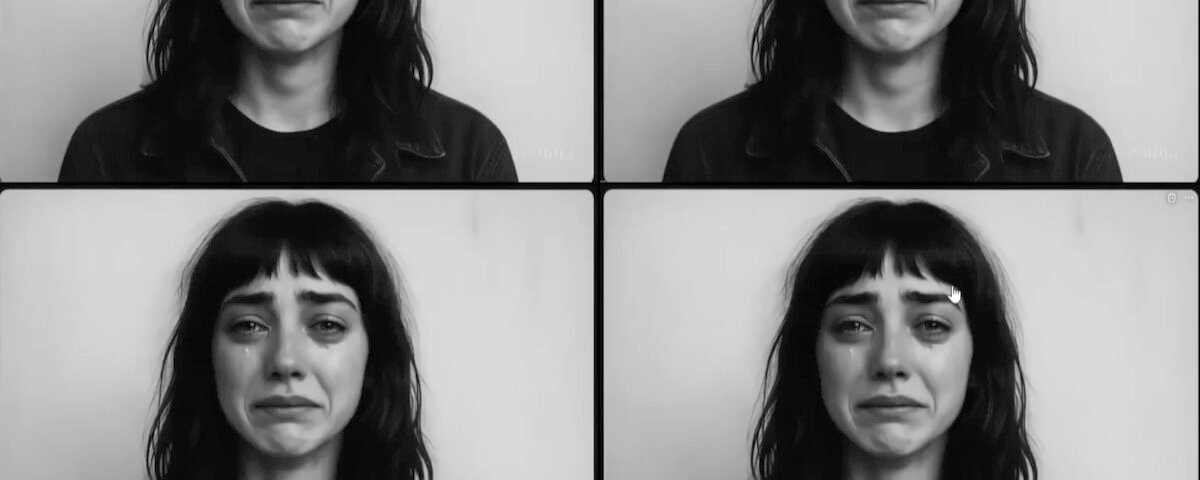
Musician and educator Rick Beato – a multi-instrumentalist, producer, and one of the most respected independent voices in the industry – recently sat down with a musician, technologist and fellow YouTuber Benn Jordan to demonstrate what AI music generation actually looks like in practice (video). Beato recently showcased this, by using free tools available to anyone, he created a complete fictional artist Sadie Winters in roughly ten minutes: a name, a visual identity, a backstory, and a finished song ready for upload to streaming platforms. The whole process required no musical training, no instrument, no lived experience of any kind. Here is the CBS video about this.
Their conclusion was not triumphant. It was grim. Nobody, he noted, has ever complained that there isn’t enough music on Spotify. There are already 100,000 songs uploaded to the platform every single day. AI is not solving a problem. It is accelerating a flood.
But the moment in that conversation that stayed with me was quieter. Beato described the one AI-generated song he had genuinely responded to – a piece that moved him before he knew what it was. And then he found out. And the feeling evaporated immediately. He couldn’t find out anything about the artist, because there was no artist. No face, no life, no story. His teenage kids said the same thing independently: they have no interest in listening to music when there is no human being attached to it. We are social creatures. We listen to people, not sounds. We want to know who made the thing, and why, and what it cost them.
That observation matters more than any royalty statistic. It identifies what music actually is, and what the factory has been trying to replace.
Meanwhile, the scale of the contamination is staggering. Spotify removed over 75 million “spammy” tracks in a single twelve-month period. Rival platform Deezer reported that AI-generated tracks now account for 44% of all new music uploaded to its platform every day. Sony Music alone requested the removal of more than 135,000 AI-generated songs impersonating its artists on streaming services. Real artists – established names – have found fabricated tracks attached to their profiles without their knowledge or consent.
And last week, Spotify announced the “Verified by Spotify” badge: a light green checkmark that will appear next to artist names to confirm a human being is behind the music. Profiles representing AI-generated content or artificial personas are not eligible.
Read that again. The world’s largest music streaming platform – the company that spent a decade telling us algorithms know what we want to hear – now needs to introduce a badge to confirm that an artist is a person.
That is not a feature. That is a confession.
We have reached the era of “Deepfake Souls.” The industry is now experimenting with synthetic “stars” that never age, never complain, and never demand a draw. By cloning human timbre and emotion, they are creating a world where the audience is “musicking” with a ghost – a simulated relationship that offers the sound of humanity without the heart.
What the Factory Is Actually Selling
Here is the part that took me years to see clearly.
The song factory is not primarily in the business of producing music. It is in the business of producing a particular kind of listener. Specifically, it needs you to be passive. It needs you to consume, not to participate. It needs you to believe, with absolute conviction, that music is something that happens to you – not something you do.
That belief is not an accident of culture. It is a manufactured condition, and it serves the factory’s economics as directly as any hit single.
Think about what the industry requires to function. It requires that you experience music as a product to be purchased, not a practice to be lived. It requires that the act of making sound feel foreign to you – embarrassing, the province of talent you were not born with. It requires that when you feel the weight of a difficult day, your first instinct is to reach for your phone and stream someone else’s emotion rather than give voice to your own.
Every time you silence yourself, someone collects a fraction of a cent. Multiply that by hundreds of millions of people doing the same thing, and you begin to understand what the factory is actually selling. It is not the song. It is your silence, monetized at scale.
The performance frame – the deep cultural assumption that music-making is subject to judgment, and that most of us will fail that judgment – is the factory’s most important product. It was not always there. For most of human history, across most of the world’s cultures, the idea that an ordinary person should refrain from music because they lacked sufficient talent would have been incomprehensible. People sang at work, at meals, at grief, at birth. The voice was not an instrument you auditioned to use. It was something you were born with, like language.
The factory changed that. Not through any single act, but through a century of reinforcing one message from every direction: leave the music to the professionals.
Now, with AI flooding the system faster than any human factory ever could, it is reinforcing a second message: you cannot even trust that the professional is a person.
Publishers now use AI to “predict” hits. If a human writer’s bridge or melody doesn’t match the “math” of previous hits, it is deleted. The musician is reduced to a biological processor for an AI’s instructions.
The One Act the Factory Cannot Monetize
When you make music, they cannot charge you for it.
When you hum while you cook, when you drum on a table, when you sing loudly in the car with someone you love, when you pick up an instrument and make an imperfect, entirely human sound – that act produces nothing the factory can package, stream, or sell. It cannot be uploaded. It cannot be verified. It does not need a green checkmark to confirm it is real.
Musicking – the active practice of making music as part of your daily life – is the one behavior the industry’s entire economic model depends on you never rediscovering. Not because it threatens their revenue directly, but because it dissolves the central lie on which that revenue rests: that music is a product created by a professional class, and your job is to pay for access to it.
You were not born a passive listener. You were trained into it. The training took decades and required the combined effort of an industry, a school system, and a cultural apparatus that progressively narrowed the definition of musician until it excluded nearly everyone. But the capacity it tried to suppress is still there. It does not atrophy the way a muscle does. It waits.
The staff songwriter in that Nashville office at 10 AM on a Tuesday is not the villain of this story. She is as trapped by the system as anyone. She started out the same way you did – with a voice and a need to use it – and the industry found a way to put that need on a production schedule. She deserves better. So do you.
The difference is this: she signed a contract. You did not.
You are under no quota. You owe no publisher your creative output. No one owns the copyright to the sound you make in your own kitchen, your own car, your own grief or joy. No algorithm can verify it. No badge can authenticate it. It is already, irrefutably, yours.
The next time you feel the familiar impulse to silence yourself – to defer to the professionals, to decide that your voice is not good enough to be worth hearing – recognize that impulse for what it is. It is not an honest assessment of your ability. It is the factory, still collecting.
Make a sound anyway. Invite someone to join you. That is not a small act of personal wellness. It is a refusal to be the factory’s most profitable product.
If you prefer, you can tune in to this and previous episodes of the Musicably podcast to listen to more about the science of brain fireworks and how you can begin your journey toward a well-nourished sonic life. Musicably Podcast is also at Apple, Spotify, Amazon, and YouTube.
Photo – Sadie Winter – screen grab from YouTube
