


Whose Name Is On Your Back?
Let me tell you what happened in Toronto in 2024.
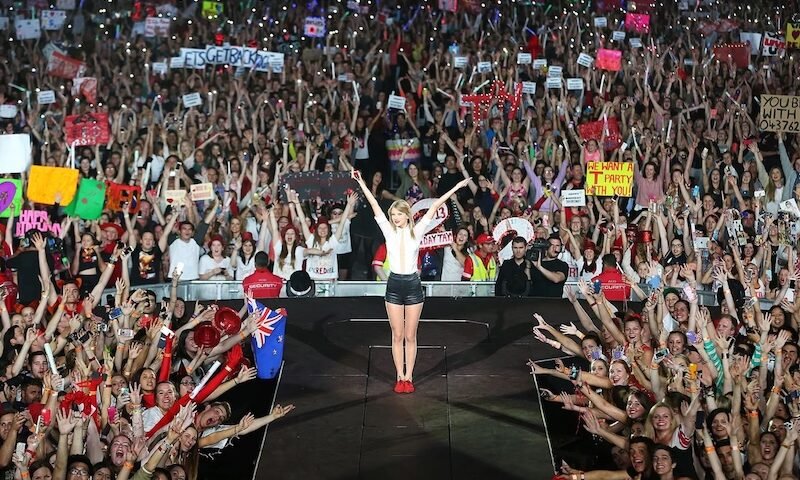
Taylor Swift came to town. Sold out multiple nights at the Rogers Centre. The city – the actual municipal government of Canada’s largest city – proposed renaming the street leading to the venue after her. A temporary honour, they said. A gesture of welcome.
Taylor Swift is worth $1.6 billion.
Her six-concert run of The Eras Tour in Toronto in November 2024 generated an estimated $282 million in total economic impact for the city. This economic boost, often referred to as a “Swift lift,” was driven by roughly 240,000 concertgoers attending shows at the Rogers Centre, with roughly 500,000 people total in town for related activities. These are key economic highlights:
- Direct Spending: Of the total, approximately $152 million was direct spending by visitors and fans, with $141 million of that coming from out-of-town visitors.
- Sector Boosts: Local businesses saw significant surges, with restaurant spending up 57% and clothing store sales increasing by 49% during the concert period.
- Hospitality Impact: Hotel occupancy reached 80.5 per cent, which was 9.6 per cent higher than the same period in 2023. Short-term rental demand increased by 163 per cent.
- Government Tax Revenue: The concerts generated approximately $39.7 million in tax revenue across all levels of government, with Toronto receiving about $8 million – while spending nearly $4 million to host.
The estimation was conducted by Destination Toronto and covered the 10-day period surrounding the concerts, specifically focusing on hotels, dining, shopping, and entertainment, while excluding the cost of ticket sales and airfare. When we combine the local economic impact ($282M), estimated ticket sales ($120M – with the average face-value ticket at approximately $500, but the secondary market listing prices climb as high as $8,600 CAD), and potential airfare ($80M median), the total financial movement surrounding these six days in Toronto likely exceeded $480 million.
She did not need the street. She did not need Toronto. Toronto, apparently, needed her – or at least its politicians thought the optics of grovelling in front of a billionaire pop star was good politics. And maybe they were right. Because the fans would have loved it. The fans always love it.
This is the world we have built around music. And sports. And celebrity. And we should probably stop pretending it’s innocent.
The Jersey Problem
There’s an image I can’t get out of my head, described by a popular YouTuber. A grown adult pays several hundred dollars for a jersey, takes it home, and walks around with another person’s last name across their shoulders. They cheer when that person wins. They grieve when that person loses. They say we when talking about what that person does for a living.
In sports, at least nobody’s pretending. A Leafs fan knows they didn’t take that penalty shot. The self-deception has limits.
Music fandom is more insidious, because the emotional connection feels personal. When someone says Radiohead changed their life, they mean it. The feeling is genuine. But what they’re describing is something that happened to them. Something they received. Someone else’s name is still on their back. They’ve just convinced themselves the jersey fits.
The Church of Passive Worship
A former professional hockey player and a successful YouTuber described what he saw from inside the industry. Two types of people in this world, he said. Those who do things, and those who watch others do things.
His NHL friend put it differently. Professional sports, he said, has become modern religion. The old tribal allegiances – to faith, to community, to shared practice – didn’t disappear when secular culture arrived. They got redirected. Now people pledge themselves to the Raptors, the Blue Jays, the Oilers. They make the pilgrimage to the arena. They perform the rituals. They belong to something.
The music industry runs the same operation. The concert is the pilgrimage. The setlist is the liturgy. The artist is the god. And the fan – the true believer – is in the congregation, hands in the air, receiving. Justin Bieber fans are famously called Beliebers. This term is a portmanteau of his last name, “Bieber,” and the word “believer,” signifying their dedicated support.
Listen to how fans talk about their favourite artists. We released a new album. We’re going on tour. Did you hear what they did to our setlist? Athletes at least don’t blur that line. But music fans slip into a first-person plural that reveals something uncomfortable – an identity so merged with the artist that the boundary between living vicariously and actually living has quietly dissolved.
The artist makes the music – until the AI takes over. The fan makes the meaning – and then moves into the artist’s house and stops building their own.
What The Artists Actually Think Of You
Here is where it gets interesting. And a little cold.
The people being worshipped are not, in most cases, primarily musicians. They are brand architects. The music – the thing fans are weeping over, tattooing onto their bodies, renaming streets for – is the top of a very deliberate sales funnel.
Rihanna understood this earlier than most. Fenty Beauty launched in 2017 and within a few years was generating over a billion dollars in revenue annually. Rihanna is now worth approximately $1.4 billion. Almost none of that came from music. The music was the audience acquisition strategy. The makeup was the business.
The Rock sells tequila. Teremana, his brand, moves millions of cases a year. Jay-Z owns a champagne house, a streaming platform, a sports agency, and a stake in multiple alcohol brands. His music career made him famous. His business career made him a billionaire. Selena Gomez built Rare Beauty into a company valued at over $2 billion. She has said openly that the brand means more to her now than her music does.
MrBeast has 350 million YouTube subscribers. He uses that audience to sell chocolate bars. Logan Paul used his to sell a hydration drink. George Lucas made Star Wars and then sold the intellectual property to Disney for $4 billion. He is worth $5.4 billion and hasn’t directed a film in decades. Steven Spielberg at $4.8 billion, Oprah at $3.2 billion – the pattern is identical across every entertainment category.
The blueprint, once you see it, is impossible to unsee. Fame is the funnel. Product is the conversion. Ownership is the engine.
The fan buying the concert ticket, the vinyl, the limited-edition merch, the jersey – they are not supporters of an artist. They are, to use the precise business term, customers in a marketing funnel, generating the social proof and platform engagement that makes the next product launch possible.
This is not cynicism. This is how it works. The artists who reach the top understand it completely. Most of their fans do not.
The Gambling Attachment
There is one more industry we should name while we are here, because it has fused itself to both sports and music fandom in ways that deserve scrutiny.
Gambling. Specifically, sports betting – now legal, heavily promoted, and attached like a parasite to every major sports broadcast. The betting industry spent over a billion dollars on advertising in North America last year. The faces on those ads are athletes. The platforms are sponsored by leagues. The message is simple: your emotional investment in the game is worth more if you have money on it.
Watch how the language shifts when someone has a bet riding. It stops being about the team entirely. It becomes about the spread, the over-under, the prop bet on the third-period goal scorer. The parasocial attachment – already doing the work of making fans feel involved – gets monetized directly. You’re not just watching. You’re participating. You have skin in the game.
The music industry hasn’t cracked gambling integration yet, but it has its own version: the parasocial monetization loop. The fan subscription. The exclusive content tier. The limited merch drop engineered for scarcity. The VIP upgrade that lets you stand closer to someone who does not know your name.
Every layer of it is designed to deepen the illusion of relationship while extracting money from the emotional investment. The fan feels more connected. The artist’s team runs the numbers on revenue per superfan.
The Substitution Nobody Talks About
Behind all of this is a quieter problem, and it’s the one that concerns me most.
For most of human history, your musical identity came from what you made, not what you consumed. You sang. You played. Badly, at first, probably – but you did it, regularly, with other people, because it was simply what humans did together. Music was a practice, not a product. Your name was on your back, not someone else’s.
At some point – and the recording industry helped engineer this shift very deliberately – music stopped being something people did and became something people had opinions about. Your taste became your identity. Your playlist became your personality. The industry sold you a musical self that required no musical skill to maintain. Just money, attention, and loyalty.
Taylor Swift does not need Toronto to rename a street after her. But some part of the fan base needed the city to do it – needed that public declaration of devotion, that collective act of worship, to feel that their investment in her mythology was real and shared and significant.
It is significant. It’s just not yours.
The music you love is real. The emotion is real. The problem is the substitution – the moment when loving music and making music became two entirely separate activities, and most people quietly accepted the first while abandoning the second.
You were handed someone else’s jersey and told it fit.
It doesn’t. It never did.
The music was always yours to make. It still is.
Photo by Scott Barbour
