


Inflight Music Garbage: A (Not So) Grand Symphony in Economy
A few day ago, I returned from a transatlantic European adventure, my wallet emaciated from relentless inflation that ate my savings faster than I could say “eurozone”. In a an attempt to not completely bankrupt myself, I did what any frugal, slightly masochistic traveler would do: I booked a flight with a German budget airline, Condor. And to their credit, the flight was… a flight. It wasn’t a spiritual awakening, but it also wasn’t a fiery descent into the abyss, which, for a budget airline, is a win in my book.
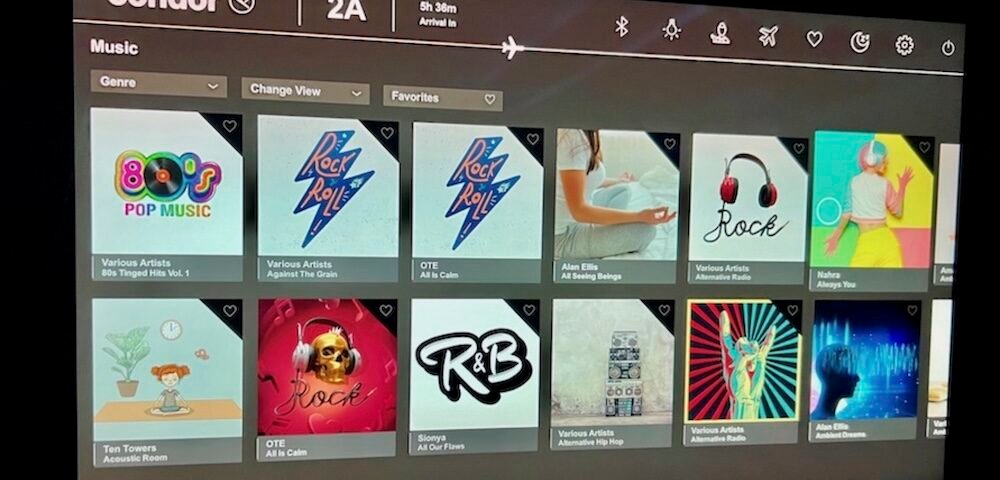
Let me start by saying: the flight was exactly what you’d expect from a budget airline. The new airplanes were so clean you could still smell the plastic, the food was – let’s be charitable – technically edible, and the flight attendants managed to “squeeze” out a few smiles. Trust me, in my experience, airline staff grimaces are now more common than pretzels, especially among the more seasoned crew. I happily noted Condor had invested in their inflight entertainment system: hundreds of movies and TV shows, games for the kids, eJournals, and all sorts of digital distractions for the modern traveler.
As a musicologist and occasional glutton for punishment, I was most intrigued by their music selection. Browsing confidently on the touchscreen in front of my seat, I began imagining the hours I’d blissfully spend enveloped by eclectic melodies, from baroque masterpieces to jazz standards – a veritable in-flight Woodstock!
But oh, the betrayal. My excitement fizzled the moment I pressed play. The sonic experience can only be described as… synthetic soufflé. Most tracks sounded like they’d been composed by a committee of bored algorithms. No, I’m not claiming all the music was AI-generated (although several tracks would have fooled HAL 9000), but it definitely had the unmistakable tang of “made-in-bulk, sample-pack-special” production. It was as if someone had fed a bunch of cheap MIDI files into a computer, told it to “make it sound like music,” and then released the results into the wild. Imagine if Vivaldi’s Four Seasons had been produced by a guy named Gary on his lunch break, using a cheap keyboard and a lifetime supply of plastic wrap. “Audio plastics,” I’d call it.
What truly boggles the mind: why serve fake-Mozart to airplane passengers? If you’re going to cut corners, let the bread get stale, not the music. Music is a relatively simple thing to get right. I understand if the pasta tastes like it was assembled by a committee of accountants – it’s the aviation tradition. But shelling out a little more for genuine recordings, actual musicians, or even vintage library tracks would surely benefit the “health” of the average listener. There are plenty of orchestras, musicians, and old catalogues gathering digital dust, and I promise: live musicians won’t demand extra peanuts.
In summary: condensation is for airplane windows, not for the inflight music collection. While my flight was perfectly adequate, my ears suffered a significant blow. Next time, I’ll bring my own music that doesn’t make my ears want to disembark mid-flight.
