


Good Quality is a Wrong Question
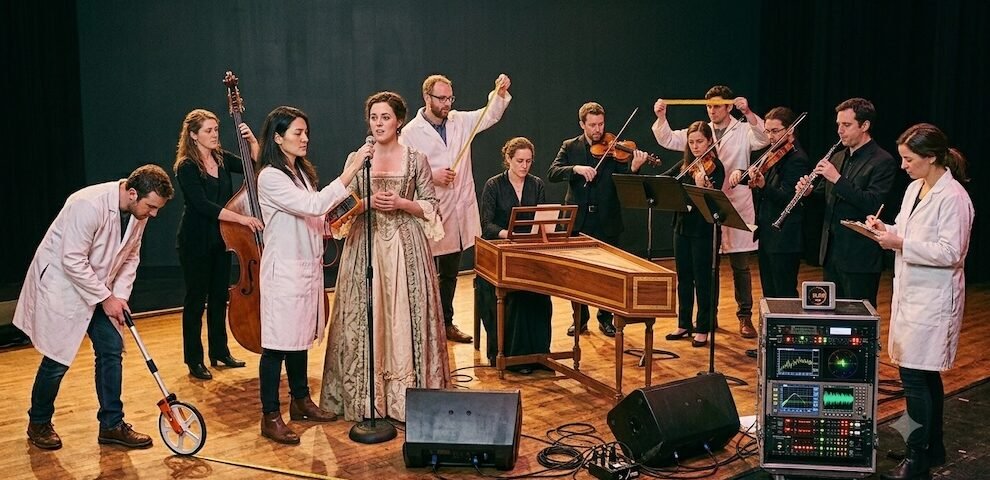
Is quality a proper word to be connected or associated with music? This is a question I have been thinking about for a while, and in this post, I will try to express my view on the topic.
My opinion is quite clear: when considered from the perspective of musicking, “quality” seems inappropriate – as if moving the entire activity of music into a position where it simply doesn’t belong.
What really is “quality” in music anyway? Professionalism may come to mind first – but that isn’t right. Is it complexity? I don’t think so. Variety? Neither. The ability to evoke or express emotion? That is highly relevant, but in my understanding, deeply individual and situational.
Nor is it about the interpretation. I believe that musicking, as an activity in itself, can be fulfilling and satisfying regardless of any aesthetic value perceived by an audience. In fact, the very moment an audience – regardless of its size – becomes an active participant, “quality” becomes irrelevant. What matters in that unique moment is whether the music “speaks” to the audience in a way they understand, reflect upon, and are willing to respond to through their own participation. In such a moment, “quality” as a measurable dimension of musicking is entirely beside the point.
Here is a definition from the internet that further highlights this absurdity:
“Measuring quality is the process of translating intangible traits – like reliability, performance, and user satisfaction – into quantifiable, actionable metrics. It typically relies on tracking a balanced scorecard of outcome, process, and balancing measures to evaluate operations, assess improvements, and meet end-user standards.”
Here is a sentence that lives rent-free in the heads of millions of adults.
I am not good enough.
Not good enough to play the piano. Not good enough to sing. Not good enough to pick up the guitar that has been sitting in the corner of the room for three years. Not good enough to join the choir, take the class, sit down at the keyboard.
This post is not going to tell you that you are good enough. I want to do something more useful than that. I want to show you that the question itself is wrong. And I want to show you exactly what it has cost you.
Where the Question Comes From
The idea that music can be measured by quality belongs to a very specific world. It belongs to professional performance, delivered by trained specialists to a paying audience in a dedicated space. A concert hall. An opera house. A recording studio. A competition stage.
In that world, quality makes sense. There are standards. There are judges. There are better and worse performances, and the differences matter. That world is real, and it has genuine value. Some of the most profound experiences of my life have happened in that world, participating in a piano competition, or sitting in the dark, listening to something that exceeded anything I could make myself.
But that world represents one narrow slice of what music is and always has been.
The problem is that its criteria have escaped the concert hall and colonized everything else. The standards designed for professional performance are now being applied to a person sitting alone at a kitchen table trying to remember a melody from childhood. That is not a fair application of criteria. That is a category error. And it is doing real damage.
Music Before It Became a Product
For most of human history, the question “am I good enough?” did not exist in relation to music. Every known human culture makes music. Not some cultures. Not the cultures with sufficient leisure or resources. Every culture. Music appears to be as natural to our species as language.
The musicologist John Blacking spent years studying music among the Venda people of South Africa. What he found was not that the Venda had talented musicians and non-musical bystanders. Everyone participated. Music was not a specialized skill possessed by some people and withheld from others. It was a human activity, as natural as walking or talking.
Expanding on this global scale, musicologist Victor Grauer demonstrated through cros-cultural data that this egalitarian, highly participatory style of music-making actually represents humanity’s oldest evolutionary baseline. (I wrote about it here.)
Christopher Small gave us the word for this. Musicking. Not music as a noun, not music as a product or a work or an achievement to be judged. Musicking as a verb. Something you do. Something that has value in the doing, independent of what it sounds like to anyone outside the room.
That shift, from music as object to musicking as activity, changes everything. Including the question you are allowed to ask about it.
The Category Error
Here is the core of what I want to say.
When you ask “am I good enough to play?”, you are borrowing a question from the concert hall and applying it to something that has nothing to do with the concert hall. The question does not fit. It was never designed for this situation.
The researcher Thomas Turino draws a clear distinction between presentational music and participatory music. In presentational music, performers deliver something to an audience. Standards apply. Judgment of quality is appropriate. That is precisely what the concert hall is built for.
Participatory music operates by completely different logic. The goal is not a polished product assessed by listeners. The goal is that something happens between the people present. And here is what Turino found: certain features that count as high quality in the presentational world actively prevent participation. Music that is too complex, too finished, too perfect creates spectators rather than participants. It shuts people out rather than drawing them in.
The question “am I good enough?” is a presentational question. It assumes a judge, a standard, an audience evaluating the result. Apply it to musicking and you have made a fundamental mistake about what kind of activity you are engaged in. You are not performing. You are doing something else entirely.
Starting Alone
Before going further, I need to say something that often gets lost in conversations about participatory music.
You do not need another person in the room for musicking to matter.
Someone sitting alone with a guitar at midnight, playing the same three chords slowly and imperfectly, is doing something complete in itself. Someone humming while they walk. Someone picking out a melody on a piano with one finger, following the sound wherever it leads. These are not lesser versions of musicking. They are not warm-up exercises toward the real thing. They are the real thing.
Solo musicking is where most people start, and for good reason. It is private. There is no audience, even a small one. The pressure that comes from being heard does not exist. You can make sound on your own terms, at your own pace, without justification or explanation.
And from that private place, something often grows. The person who plays alone begins to notice they want to play with others. The person who hums to themselves begins to wonder what it would feel like to hum with someone else in the room. Solo musicking is not a lesser stage. It is often a necessary one in these “modern” times. It builds something solid enough to take the next step from.
The path runs from alone to together. Both ends of it are real. Neither is a compromise.
What Actually Matters
If quality is the wrong measure, what is the right one?
Not precision. Not complexity. Not technical achievement of any kind.
In solo musicking, what matters is whether you are present to what you are making. Whether the sound has meaning to you in that moment. Whether something is happening that would not be happening if the instrument were sitting silent.
In participatory musicking, what matters is whether the music is alive between the people making it. Whether it speaks to those present in a way they can hear and respond to. You feel this immediately when it is there. You feel its absence just as immediately. No judge required.
I wrote recently about the Mamuna tribe, and about what happened when the musician Daniel Hanson encountered their recordings and expanded them. The people who find this music on YouTube and are moved by it do not know the full story of how it was made. They are not evaluating its authenticity or its technical credentials. They are being reached by it. Something in the sound speaks to them and they respond.
That is not quality. That is resonance.
Beauty works the same way. Nobody decides to find something beautiful. It arrives uninvited. The listeners responding to those recordings are not applying any standard. The music finds them. That is what music does when it is working. But it has nothing to do with the measurable quality the professional tradition trained us to look for. Resonance cannot be judged from outside. It is only known from inside, by the person it reaches.
The Scruton’s Lament
A conservative philosopher Roger Scruton would push back here, and he deserves a direct response. In The Aesthetics of Music, his most rigorous work on the subject, Scruton argues that listening to music is never passive. It requires what he calls an imaginative act – a capacity to “move with” the music, to follow its logic, to hear not just sound but tone, meaning, and form. The erosion of that capacity troubled him deeply. He spent decades watching students lose the ability to hear why Schubert matters in a way a pop jingle cannot. On his own terms, I agree with him completely.
But Scruton never asked the prior question. He assumed the imaginative capacity could be cultivated through exposure and training in the listening tradition. What he did not consider is whether that capacity might itself be rooted in something more fundamental – in the physical, embodied experience of making sound. The person who has never made music lacks a reference point that no amount of concert attendance can fully provide. The student who cannot hear musical depth may not need better ears. They may need, for the first time, to feel what it is to make sound with their own body. Scruton’s lament and mine have the same cause. Musicking is not the enemy of his aesthetic. It may be its forgotten foundation.
The Cost of the Wrong Question
The question “am I good enough?” does not simply discourage people. It removes them from their own musical lives entirely. It takes something that belongs to them as human beings and places it behind a gate they have been told they cannot open.
That gate is not natural. It was built. Over roughly four centuries, as music became increasingly professionalized and commercialized, the role of the ordinary person shifted from participant to audience and consumer. We stopped making music and started buying it. We stopped singing and started streaming. We learned to sit still and listen, and to feel grateful that the professionals were handling the difficult work on our behalf.
The result is a population of people who love music deeply, and believe, with complete sincerity, that music is not for them.
That is not an inevitable condition. It is a cultural distortion. And it is one we have been living inside for so long that most people cannot see it for what it is.
The Right Question
Stop asking if you are good enough.
Start asking if the music is alive.
Those are completely different questions, and only one of them leads anywhere worth going.
The first question hands the power to someone outside you. A teacher, a judge, an imagined audience with higher standards than your own. The second question returns the power to where it always belonged. To you. To the moment. To the sound you are making right now, with whatever you have, wherever you are.
You are a musical person. Not because you are talented. Not because you have been trained. Because you are human, and this is what humans do.
The question was never whether you are good enough.
The question is whether you are ready to begin.
This episode is also available as a podcast. Listen on Spotify — or find the full Musicably podcast archive, including Apple, Amazon, and YouTube — at Musicably Podcast.
Picture by Gemini
