


A Breath of Melody: The Art of Whistling
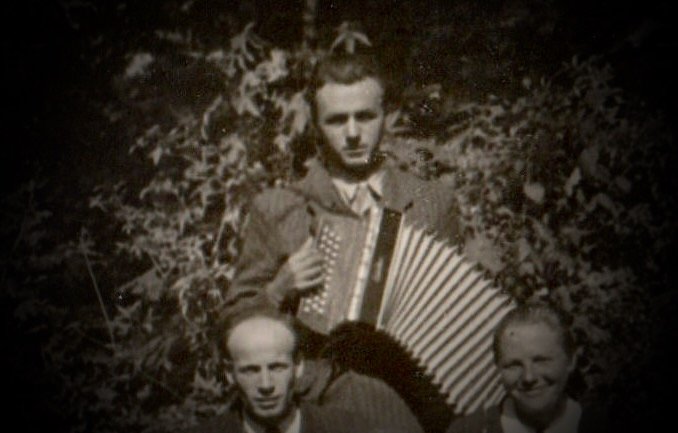
One of the first sounds I remember from my childhood was a silver thread of sound moving through our home: my father whistling.
My ocko – as we say in Slovak – had a great musical ear, a beautiful baritone, and a fantastic memory for songs – but not much luck in his life to use these gifts for more than the enjoyment of himself and the people around him. His dream was to share his musicality with his children, and the first, most natural way to do this was to whistle. He whistled those beautiful melodies he carried in his memory on every suitable occasion, whenever we were around.
When we talked about this years later, he explained his thinking to me. From the moment I was born, he had decided to give me as much music as possible. He knew that my mother and other family members would naturally sing lullabies and children’s songs, so he chose a different path. He focused on pure melody – no words, no text, just the musical line itself. For him, that was music in its most essential form.
Looking back, I am glad to say that my ocko – my dad – succeeded. Most of my life has been dedicated to music. And I see his legacy continuing when I watch my own children singing and playing. A whistled melody, offered freely and without ceremony, turned out to be one of the most powerful musical gifts one person can give another.
Actually, the very first “normal” concert I’ve ever attended, was a whistler – a fabulous Hungarian musician Tamas Hacki with his band. My favourite movie music composer Ennio Morricone used whistling in his score to the movie The Fistful of Dollars.
These early memories returned to me recently, and they brought a question with them: what has happened to the art of musical whistling?
I can produce a whistle in four different ways and whistle a complicated melody with ease. But I rarely hear other people whistle anymore. Even at concerts or sporting events here in North America, people seem to prefer yelling to whistling – the piercing, joyful signal that was once as natural as applause across much of Europe. Something has slipped away quietly, without anyone quite deciding to let it go.
I decided to look into this, because I believe whistling is exactly the kind of musicking activity that Musicably exists to restore. It is simple. It is human. It is healthy. And it is disappearing from our lives at precisely the moment we need it most.
Older Than We Think
Whistling is one of the oldest human musical acts we know of. Archaeologists have found bird-bone whistles dating back tens of thousands of years, which tells us that early humans were already fascinated with the relationship between breath, shape, and sound long before anything we would recognize as civilization existed.
But human lip-whistling – the act itself, no instrument required – is almost certainly older still. It costs nothing. It leaves no archaeological trace. It needs only a pair of lips, a breath, and a moment of stillness.
The physics are elegant: when you force air through a small opening shaped by your lips, the air vibrates and your mouth cavity acts as a resonant chamber, shaping and amplifying the sound. Adjust your tongue position and the pitch rises or falls. The whole instrument fits in your face. Every human being is born carrying it.
For most of human history, people used this instrument constantly. Shepherds in the Canary Islands developed a complete whistled language – Silbo Gomero – capable of carrying complex messages across mountain valleys that a shouted voice could never reach. It is now a UNESCO Intangible Cultural Heritage, still taught in schools on the island of La Gomera. In Turkey, a similar whistled language survives in remote highland villages. Across Central Asia, the Americas, and sub-Saharan Africa, whistling served as long-distance communication, ritual signal, and everyday music all at once.
When researching for this text, I discovered a real gem. It is a song by English madrigal composer John Bennet from the end of the 16th century called Venus’ birds and sung by one of the best contratenors Andreas Sholl – and he also whistles there.
Closer to home, the golden age of artistic whistling ran from roughly the 1920s to the 1950s, when professional whistlers – known as siffleurs – performed with big bands and symphony orchestras, recorded albums, and filled concert halls on both sides of the Atlantic. Agnes Woodward ran the California School of Artistic Whistling from 1909, training performers who would go on to astonishing careers. Her students included, among others, Bing Crosby and Pat Boone. Thomas Edison’s earliest phonograph demonstrations relied heavily on whistling, because shrill whistling could be reproduced perfectly by the technology of the time, when the recorded human voice was still too weak to carry.
Then, gradually, it faded. Not because it was banned or criticized. It simply stopped being passed down. The tradition that my father carried so naturally – the tradition of moving through your daily life with melody in it – became rare, then unusual, then almost invisible.
What Whistling Actually Does to You
The science of whistling is more interesting than most people suspect.
At the physiological level, whistling is controlled breathing. Your diaphragm engages, your airflow steadies, and your body enters a state that is measurably calmer than the anxious, shallow breathing of a stressed workday. Research on vagal nerve stimulation – the body’s primary pathway for moving from a stressed to a relaxed state – consistently shows that controlled breath-based activities like humming, singing, and whistling activate exactly this pathway. The whistler is, without knowing the terminology, performing a simple and effective piece of self-regulation.
At the psychological level, whistling does something that few other musical acts manage: it carries no performance anxiety. Nobody has ever felt ashamed of being a “bad whistler” the way millions of people carry a deep shame about their singing voice. Whistling exists outside the performance frame almost entirely. It is breezy, in the best possible sense of that word. It announces itself without demanding attention. It offers melody without asking for evaluation.
This is not a small thing. It means that whistling is one of the lowest-friction entries into daily musical life available to any human being. You do not need lessons to start. You do not need an instrument. You do not need privacy, though a tiled corridor with good reverb certainly helps. You need only a breath and the memory of a melody you love.
And neuroscience has recently confirmed what any whistler already knows intuitively: the activity engages both hemispheres of the brain simultaneously, bridging the logical and emotional sides in a way that ordinary speech does not. The bilateral brain stimulation that whistling produces is the same reason that people report feeling mentally clearer, more creative, and more emotionally settled after a good whistle. It is not superstition. It is architecture.
The Permission That Went Missing
Here is what I think actually happened to whistling.
It was not replaced by anything better. It was gradually made to feel unnecessary – and then slightly presumptuous. As recorded music became available in every pocket, as professional performance set an ever-higher standard for what “real” music sounded like, the informal musical life of everyday people quietly contracted. Whistling down a corridor began to feel like an imposition. Like you were performing unrequested, in a world that already had plenty of professional sound.
This is the same cultural shift that made people say “I’m not musical” – a phrase that would have been incomprehensible to most humans across most of history. Everyone made music. Everyone sang, drummed, hummed, whistled. The idea that music-making belongs only to those with formal training is a recent and, I would argue, damaging invention.
Whistling disappeared as a casualty of that same shift. It was not silenced. It was simply never given the permission to continue.
An Invitation
So here is what I want to suggest, simply and directly.
Start whistling again. Or start for the first time.
The technique is learnable. If you cannot yet produce a clear tone, the most common starting point is this: wet your lips, form a small round opening, place the tip of your tongue lightly behind your lower teeth, and blow a gentle, steady stream of air. Small adjustments to the opening and tongue position will find the note. It may take a few minutes or a few days. The moment it arrives, you will know it, because your whole chest will feel it.
Once you have a tone, melodies follow. Slide between two notes slowly, then add a third. Whistle a fragment of something you love – a folk tune, a lullaby, a phrase from a piece of music that has mattered to you. Look for a melody with a clear ‘arc’—something you can lean into. While modern rhythmic genres have their own energy, whistling thrives on the lyrical, flowing lines found in folk tunes or classic scores. Start short. Two bars of something beautiful is worth more than an ambitious attempt at a full song that frustrates you into stopping.
And when you find yourself in a reverberant space – a staircase, a tiled corridor, a stone hall – let the room do what it was built to do. Your whistle will bloom in those spaces in a way that will surprise you. Hard surfaces reflect sound back to you, enriched and sustained, and suddenly you sound, to your own ears, like something approaching the musicians you admire.
Then take it outside. Into your day. Into your walk to the coffee machine, your moment waiting for the elevator, your quiet Tuesday afternoon. Not as a performance. Not as a statement. Just as a man or woman moving through their life, with melody in it.
My father knew something that most of the world has forgotten: that music does not need a stage. It needs only a person willing to let it happen. He gave me that understanding through a thousand whistled melodies before I was old enough to name what I was receiving.
I am still receiving it. And I believe you can too.
Whistling is one of the oldest human musical acts, one of the simplest, and one of the most endangered. At Musicably, we believe it belongs in every life. If this post has awakened something in you, we would love to hear about it – and in a future post, we will look at the practical techniques in more detail, so that wherever you are starting from, you can find your whistle.
If you prefer, you can tune in to this and previous episodes of the Musicably podcast to listen to more about the science of brain fireworks and how you can begin your journey toward a well-nourished sonic life. Musicably Podcast is also at Apple, Spotify, Amazon, and YouTube.
In the photo – my father Rudolf, with his parents.
