


Is “Saving the Music” Actually Killing It?
Why $75 Million Can’t Buy What Your Grandmother Had for Free
When Apple recently scaled up its partnership with the Save The Music Foundation, the headlines were celebratory. And why not? Since its founding, STM has invested over $75 million in more than 2,800 school music programs across underserved American communities. A new $10 million endowment is now securing the organization’s future. This is serious money, sustained over decades, directed at a problem that genuinely matters.
STM’s own stated mission is “the transformative power of making music.” Making it. Not consuming it, not watching it performed. Making it.
So here is an honest question, asked without malice toward an organization doing real good: if the goal is making music, why does the model consist almost entirely of buying things?
Fencing Off the Musical Commons
The STM grant package, instruments, recording equipment, music technology, reflects a deep and largely unexamined assumption: that music requires an external investment to exist. That communities “lack music” because they lack equipment. That participation begins with acquisition.
This assumption is so embedded in Western culture that it barely registers as an assumption at all. But it is one. And it has consequences.
When we tell a child, implicitly or directly, that music begins with a device or a specialized instrument, we fence off what might be called the musical commons, the vast shared territory of human musical expression that requires nothing but a willing body and a willingness to begin. We hand them the message that music is something received from the outside, rather than something that lives inside them already.
The most sophisticated musical instrument ever created is the human voice. It is always available, costs nothing, and was the foundation of every musical tradition in human history before the first instrument was ever built. And yet the voice is entirely absent from the STM model. It doesn’t appear in the grant categories. It doesn’t need a shipping address.
The voice is only the beginning. A harmonica fits in a shirt pocket. A ukulele can be learned to genuine usefulness in weeks. A kalimba, an ocarina, a mountain dulcimer, a recorder: instruments from across human cultures that share one quality: they invite participation rather than demand mastery. None of them require a foundation grant. All of them are within ordinary reach.
The problem was never the absence of equipment. The problem is that we have convinced ourselves, and our children, that without the equipment, we have no right to begin.
How the Permission Was Revoked
This didn’t happen overnight. Over the past few centuries, Western culture underwent a shift so gradual it was nearly invisible: music moved from something people did to something people consumed. From communal practice to professional performance. From participation to spectatorship.
Recorded music played a central role. When music became a purchasable product, the reference point for what music “should” sound like became the professional recording, produced, polished, performed by the most gifted people alive. Ordinary voices began to feel insufficient. Ordinary playing began to feel embarrassing.
Schools reinforced this at the institutional level. Music education organized itself around auditioned choirs, competitive bands, and performance disciplines built on selection. The message received by millions of children, rarely spoken aloud but embedded in every audition and every grade, was that music belongs to the talented. Everyone else is the audience.
The result, in the most direct terms: the average Western adult is genuinely frightened to sing. Not perform, simply sing. Asked to join in, they apologize. They cite a teacher from thirty years ago who told them they were off-key. They describe themselves as “not musical” with a certainty that would be bizarre applied to any other basic human capacity, like walking or speaking.
This is not a natural condition. It is a learned one. And it can be unlearned.
What Actually Kept Music Alive
There are places in the world, and within living memory, places in the West, where the story was completely different.
Not because people were more talented. Not because they had better equipment. But because four interlocking structures kept participatory music woven into daily life without anyone calling it music education.
Families sang. Not as a performance and not on special occasions, but as a reflex of being together. A melody hummed while working. A lullaby that wasn’t about the quality of the voice but about the warmth of the presence. Children absorbed the habit before they were old enough to be self-conscious about it.
I remember it like yesterday, when a well-known song on the radio in my grandparents’ kitchen initiated a moment when everyone joined in, and for some 3 or 4 minutes we all sung together – with the radio. It was fun and joyful. And immediately after, everyone would continue with their chores.
Faith communities sang. Congregational singing, where it remained central, was perhaps the most durable participatory music institution in human history, precisely because it required no audition. You sang because gathering required it. The practice was weekly, the expectation was universal, and the implicit message was constant: your voice belongs here.
Schools reinforced what family and community had already established. They gave the habit structure, introduced simple instruments and basic theory, and treated musical participation as a normal dimension of a child’s development, not a specialized discipline for the identified talented.
During my childhood, we would have singing classes and a very simple choir singing every week. To have something like orchestra with real instruments – that didn’t even cross anyone’s mind. I remember, when I was about 9 years old, and each student was asked to participate in a small singing competition in the class. I wanted to sing something “new”, so I asked my grand-grand father, who was in his nineties, to teach me his favourite song from his youth. And he taught me a song, which I remember to this day – a recruitment song he learned when he was leaving for his compulsory military service in the 19th century.
In the fabric of daily and communal life, music was simply present. People sang while working, played at celebrations, passed songs between generations the way they passed everything else worth keeping. No program required. No grant applied for.
These four pillars, family, faith community, school, and the texture of communal life, did not need millions of dollars. They needed only the cultural assumption that music was something ordinary people did. When that assumption held, music educator John Feierabend’s vision of children who are “tuneful, beatful, and artful” for a lifetime was not an aspiration. It was simply the normal outcome of a normal childhood.
The pillars have weakened at different rates in different places. In some parts of the world, the memory of participatory musical life is still living, carried forward by families who still gather and sing, by communities where that shared musical territory was never fully surrendered. In much of the West, the weakening happened earlier and more completely. But it was never total. The impulse was interrupted, not destroyed.
The Two Steps Back
That distinction matters enormously. A capacity that was destroyed is gone. A habit that was interrupted can be recovered. And the recovery, when it happens, follows a recognizable path.
The first step is individual. It is the private, low-stakes rediscovery that you can make music, that your voice is sufficient, that your sense of rhythm is real, that a simple instrument held in your hands can produce something genuinely musical. This step requires no audience, no teacher, no assessment. It requires only the willingness to begin without permission. Hum something. Sing in the car. Pick up a kalimba. Find a recorder gathering dust and blow a note. The talent myth dissolves fastest in private, where there is no one to perform for and no grade to receive.
The second step is communal. It is bringing the recovered musicality into shared space, discovering that making music with other people produces something qualitatively different from making it alone. The synchrony, the call and response, the experience of voices and simple instruments joining into something none of them could make by themselves. This is where music’s oldest and deepest functions activate: building trust, marking belonging, transmitting what matters across generations.
These two steps are not a program. They are not a curriculum. They are simply the sequence in which musical confidence has always been rebuilt, in every tradition where it was lost and then recovered. The individual reclamation comes first, because you cannot bring to a community something you haven’t yet reclaimed for yourself.
And the tools available for that first step are wider than ever. A smartphone app can teach you a folk melody. An online community can hold you accountable. Even AI, used wisely, can serve as a patient, non-judgmental first audience while you find your footing. The technology that helped commodify music can, in the right hands, help restore it. The question, as always, is whether we use it to participate or merely to consume.
What $75 Million Can’t Buy
Save The Music is doing genuine good. The children who receive instruments and learn to play them are better off. The endowment is worth celebrating.
And none of it addresses the actual problem.
The actual problem is a culture that revoked permission. That turned music into a credentialed space. That convinced generations of ordinary people, people with functional voices, intact rhythmic instincts, and a genuine human need to make music, that they had no right to begin without equipment, training, and demonstrated talent.
No grant restores that permission. No technology replaces the parent who sings unselfconsciously in the kitchen. No program substitutes for the community where joining in is simply what you do.
The most radical act available to you right now is not buying a new instrument or downloading another app. It is deciding, without waiting for permission, that you are already musical enough to begin. Hum something today. Sing along to whatever is playing. Pick up the simplest instrument within reach and make a sound with it. Then do it again tomorrow, and the day after.
Music was never taken from you. You were only told, persistently and from an early age, that it belonged to someone else. It doesn’t. It never did.
If you prefer, you can tune in to this and previous episodes of the Musicably podcast to listen to more about the science of brain fireworks and how you can begin your journey toward a well-nourished sonic life. Musicably Podcast is also at Apple, Spotify, Amazon, and YouTube.
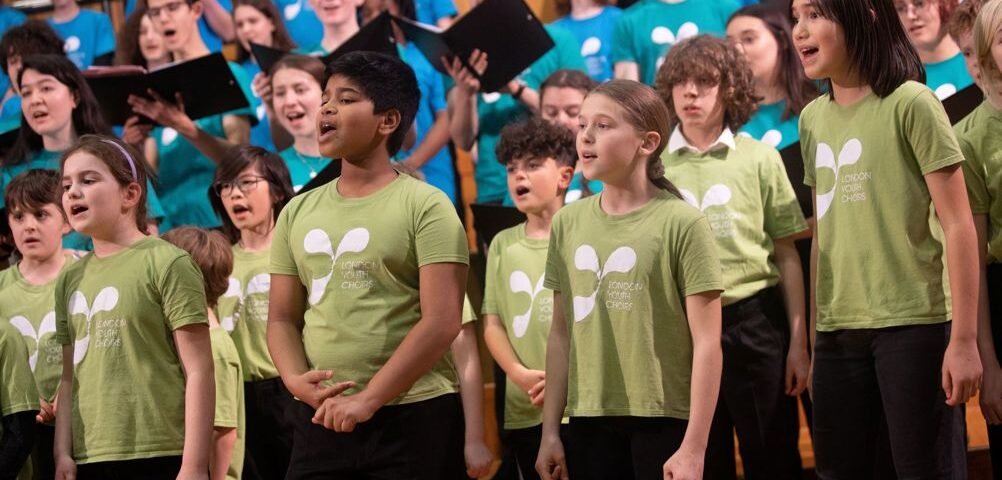
Photo: London Youth Choirs
