


My 10 Best Music Books of 2025
A Musicably Annual Reading List
At the beginning of each year, I find myself doing the same thing: looking back at what the previous year brought us in music writing. Not the music itself – but the thinking about music. The books that tried to understand what music is, what it does to us, and what we are doing to it.
This year I considered around three dozen relevant non-fiction books published in 2025. From those, I have chosen ten that genuinely caught my attention – titles that bring new perspectives, challenge comfortable assumptions, and in some cases, confirm worries I have been carrying for years. As always, my selection reflects my own interests and priorities. But I believe these are books that broaden our understanding of music in ways that matter – not just for musicians, but for everyone who lives with music. Which is to say, everyone.
Looking across all ten, a few threads become visible. One is the question of technology – not a new topic, but becoming more urgent. Streaming, algorithms, and now artificial intelligence are reshaping not just how music is distributed, but what music becomes, and perhaps more troublingly, what we become as listeners. A second thread is the human voice and body as the original musical instrument – something we have been slowly, quietly surrendering. And a third thread is the question of what music is actually for – not as art, not as entertainment, but as a human practice as old as our species.
I have grouped the ten books into three loose clusters, which I hope will make the connections between them clearer:
The Warning Books – three authors who document what is being lost, commodified, or misunderstood in our current relationship with music.
The Understanding Books – five authors who deepen our sense of what music is, where it comes from, and why it matters in ways we rarely stop to consider.
The Practice Books – two authors who ask what we should actually do – with music, with our voices, with our attention.
And then, outside all categories, a personal bonus. Because sometimes a book belongs on a list not because it advances scholarship, but because it honours the moment music first changed your life.
The Warning Books
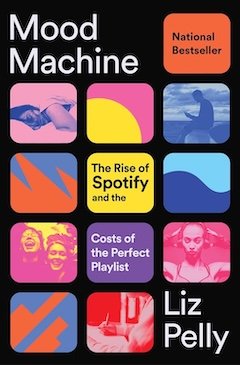
1. Liz Pelly – Mood Machine: The Rise of Spotify and the Costs of the Perfect Playlist
I remember reading The Future of Music: Manifesto for the Digital Music Revolution by Gerd Leonhard and David Kusek sometime in the post-Napster era (2005?), and feeling genuinely excited. Music like water – available everywhere, flowing freely, accessible to everyone. It seemed like liberation. It took me years, and a blog I started in 2017, to understand what was actually happening: that the same promise of abundance was quietly turning music into wallpaper, and musicians into content providers competing for algorithmic favour.
Liz Pelly has written the book I was eventually reaching for back then, and could not have written myself. Drawing on over a hundred interviews with musicians, industry insiders, and former Spotify employees, she documents in careful, damning detail what the streaming model has actually produced – not the democratisation of music, but its flattening. Playlists optimised for mood and productivity. Music designed not to be heard but to be tolerated. And behind that, the quiet groundwork for replacing human musicians with AI-generated sound entirely.
This is a national bestseller and a finalist for the National Book Critics Circle John Leonard Prize. It deserves every reader it finds. If you read only one book from this list, read this one first.
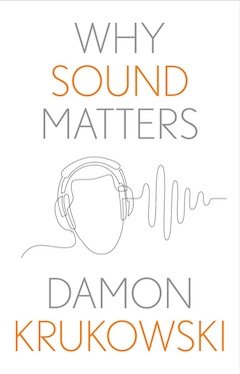
2. Damon Krukowski – Why Sound Matters
Where Pelly focuses on the streaming economy, Krukowski – himself a musician – widens the frame to sound itself. What does it mean to live in a sonic environment? What do we lose when that environment is degraded, commercialised, or simply ignored?
My worry here runs parallel to what I observe in the visual domain: younger generations are losing the ability to sustain attention. Constant scrolling, a focus span measured in seconds, a preference for stimulation over depth. Sound is suffering the same fate. The new audio products sold as “music” – algorithmically assembled, designed for passive consumption – may be causing a similar damage to something even more fundamental: the ability to hear a melody, to follow it, to let it develop. A melody is time made audible. If we lose the patience for time, we lose the melody. And if we lose the melody, we lose one of the basic foundations of song, of musical form, of music as a language.
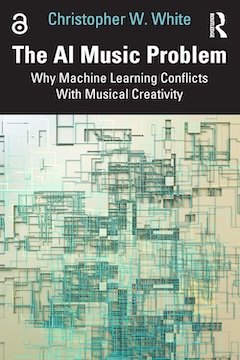
3. Christopher W. White – The AI Music Problem: Why Machine Learning Conflicts With Musical Creativity
The arrival of AI-generated music has produced two predictable responses: enthusiasm and panic. White, a music theorist and computer scientist, takes a more interesting position – he argues, carefully and technically, that music poses unique challenges to machine learning that other domains do not, and that understanding why this is so tells us something profound about what music actually is.
My own worry about this territory is somewhat different from White’s, though complementary. I am not primarily concerned with whether AI can imitate music convincingly enough. My concern is simpler: that convenience will win regardless. We have seen this before. Betamax was technically superior to VHS. The CD was audibly superior to the MP3. The DSLR camera produces better photographs than a smartphone. None of that mattered in the end. What mattered was ease of access and the path of least resistance. If AI-generated music is convenient, plentiful, and free, a significant portion of the population will accept it as music – and something will be lost that may never be recovered.
White’s book is the academic argument behind the intuition many of us have been carrying. Expect to be challenged.
The Understanding Books

4. Elizabeth Alker – Everything We Do Is Music: How 20th-Century Classical Music Shaped Pop
The title alone would have made Christopher Small (he coined the term “musicking”) smile. This is a book about connection – about the invisible threads that run from the European avant-garde to The Beatles, from Stockhausen to Donna Summer, from Bruckner to Sonic Youth. Alker, a broadcaster and writer, argues through interviews with Paul McCartney, Steve Reich, Jonny Greenwood, and many others, that the story of popular music cannot be told without the story of classical music’s most radical experiments.
What I find important here goes beyond musical genealogy. Musical traditions matter. You cannot know where you are going if you do not know where you came from. I have always valued Roger Scruton’s writings on music precisely because he understood this – that music carries within it a kind of memory, a continuity of human experience across time. Alker’s book is a popular, accessible version of that same argument, richly illustrated with the music we think we already know.

5. David Hajdu – The Uncanny Muse: Music, Art, and Machines from Automata to AI
Hajdu is a contrarian here, and worth engaging with honestly. Because his argument is not foolish, even if I ultimately disagree with where it leads.
His thesis is that machines have always enabled creativity rather than stifling it, and that AI is simply the latest chapter in a long, largely positive story. And he is partly right. Consider the piano. In its earlier forms as harpsichord and clavichord, the keyboard instrument allowed one person to express the harmonic complexity of a small ensemble – ten fingers commanding what previously required many hands. That was a genuine creative revolution. The piano did not diminish music – it expanded it.
But the same history contains a cautionary sequel. The player piano (automatic, using paper rolls) arrived and accomplished something different: it removed the musician’s fingers entirely. The instrument still made sound. But the human being was no longer needed. That is the fork in the road that Hajdu’s optimism passes too quickly, and it is precisely the fork at which we now stand with AI. The question is not whether machines can enable creativity – they can, and have. The question is which kind of machine we are building, and for whose benefit.
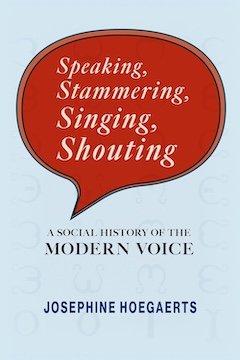
6. Josephine Hoegaerts – Speaking, Stammering, Singing, Shouting: A Social History of the Modern Voice
Is there anything more fundamentally human than the voice? Before the instrument, before the drum, before the written note – there was the voice. The mother’s lullaby. The funeral farewell. The communal song that held a village together in the dark. These things are not historical curiosities. They are, or were, biological and social necessities.
Hoegaerts does something unexpected with this material. Rather than celebrating the great singers and orators of the 19th century, she looks at ordinary voices – singers, speakers, and stammerers – and asks what it meant, in an era of increasing professionalisation and medical scrutiny, to have a “normal” voice. What she reveals is a history of gatekeeping: the normalisation of a standard voice, the pathologising of deviation, the slow process by which something spontaneous and universal became managed, evaluated, and in many cases, silenced.
The parallel to musical “talent” as a gatekeeping concept is direct and uncomfortable. The same cultural machinery that decided whose voice was acceptable also decided who was “musical” and who was not. This book is a social history of that machinery. Described by one reviewer as “a pivotal contribution to contemporary knowledge of the voice’s role in society,” it is also, quietly, a book about what we have lost.
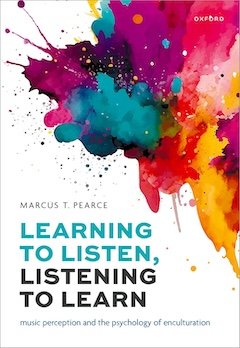
7. Marcus T. Pearce – Learning to Listen, Listening to Learn: Music Perception and the Psychology of Enculturation
This is the most technical book on my list, and possibly the most important for the argument that underlies everything I do at Musicably.
Pearce’s central thesis is that music perception depends on statistical learning and probabilistic prediction – that we learn to hear music the way we learn to speak a language, through exposure, repetition, and the gradual internalisation of patterns. Different cultures produce different musical expectations because listeners from those cultures have been enculturated into different musical systems. No listener is musically “blank.” Every listener has learned something.
I want to note a small but important distinction here. Pearce speaks of music as “learned,” and I agree. But I would add that learned and developed may not be quite the same thing. My sense is that musical capacity is already there, present in every human being, waiting to be drawn out rather than installed from scratch. We learn to walk, yes – but we do not learn to breathe. Musical responsiveness may be closer to breathing than we think: an innate capacity that requires a certain environment to flourish, and that withers without use. Whether or not that distinction holds philosophically, Pearce’s research supports the core claim: musical ability is not a gift possessed by the few. It is a capacity shaped by experience, available to all.

8. Marc Duby – What Musicking Affords: Musical Performance and the Post-Cognitivist Turn
I should be transparent: this book has particular personal significance for me, because it engages directly with Christopher Small’s concept of “musicking” – the idea, foundational to my own work, that music is not a thing but an activity, a verb rather than a noun.
Duby brings this concept into conversation with contemporary cognitive science, drawing on enactive cognition, phenomenology, and James Gibson’s theory of affordances to argue that musical performance is grounded in action – in the relationship between a body, an instrument, and an environment. Music is not in the head. It is in the doing.
I should note that my own understanding of musicking differs slightly from Small’s, and perhaps aligns more closely with the German musizieren – I use the term specifically for active music-making, the direct, embodied participation in producing sound. Not listening, however attentively. Not attending a concert, however transformative. The doing itself. Duby’s work, in connecting that doing to the latest thinking in cognitive science, gives the concept a rigour and a reach it deserves.
The Practice Books
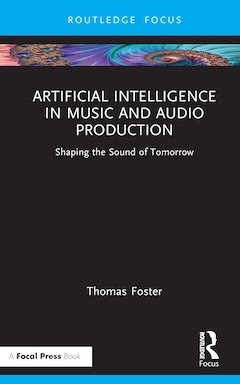
9. Thomas Foster – Artificial Intelligence in Music and Audio Production: Shaping the Sound of Tomorrow
I include this book not as a warning but as a counterweight – and because I believe it represents a genuinely important perspective.
Knowing your tools gives you power over them. The person who understands how a camera works sees differently through its viewfinder than the person who simply points and shoots. The musician who understands how a piano produces sound hears it differently. And the music-maker who understands how AI tools work – what they can and cannot do, what choices they encode, what aesthetics they default to – is in a fundamentally different position than one who simply accepts their output.
Foster’s book is a practical, accessible overview of how AI is already being used in music production today, from composition and sound design to mixing and mastering. It is not a critical work. But used alongside the more critical books on this list, it equips the reader to engage with these tools as an agent rather than a consumer. Blind use and passive acceptance are the real dangers. Knowledge is not the enemy of music. It never has been.

10. Birte Dalbauer-Stokkebæk – Mindfulness for Musicians: Upbeat!
Mindfulness has had a complicated decade. It arrived with enormous promise, became something of a cultural wave, produced its share of shallow applications and commercial distortions — and then, in many circles, began to recede. My hope, though, is that what looked like recession was actually something better: absorption. That enough people quietly incorporated its core practices into their daily lives that they no longer needed to name what they were doing. It became, simply, how they lived.
I hope the same thing happens with musicking. Not that it becomes a movement, a brand, a course catalogue – but that it becomes, for enough people, simply a part of how they move through the day. A few minutes with a tin whistle when tense. A rhythm tapped on a table when restless. A melody hummed together with a friend while walking. Small, private, unremarkable – and deeply sustaining.
Dalbauer-Stokkebæk’s book, written by a singer, voice therapist, and mindfulness teacher, brings these two practices into careful conversation. It includes practical exercises, audio recordings for meditation, and chapters on breath, the nervous system, and performance anxiety. For musicians, it is immediately useful. For the rest of us – for everyone who makes sound, which is everyone – it points toward something larger.
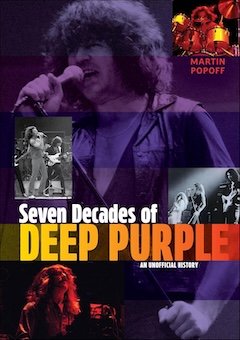
Personal Bonus: Martin Popoff – Seven Decades of Deep Purple: An Unofficial History
I have seen Deep Purple three times in concert. Each time was an experience – powerful, loud, communal, and entirely different from anything else I know in music. But none of those concerts was where it all began for me.
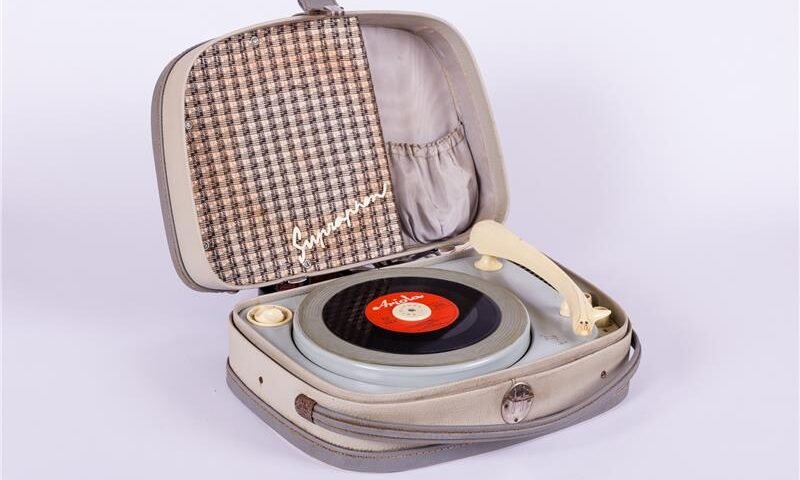
It began sometime in 1974, in my parents’ home, with an old gramophone and a brand new, my very first, vinyl LP called Fireball, by Deep Purple. I put the needle on the record, and something happened that I did not have words for at the time – something that I have spent much of my adult life, in one way or another, trying to describe. The sheer physical force of it. The sense that sound could do something to you that nothing else could. That music was neither decoration nor entertainment but a colossal power – raw, immediate, profoundly and utterly engulfing.
That moment is why I am a musicologist. It is why I started Musicably. It is why I believe, with complete conviction, that music is not a talent possessed by a few, but a birthright belonging to everyone.
Martin Popoff’s book covers all seven decades of the band’s history, drawing on nearly fifty interviews with Purple alumni, in a gorgeously produced full-colour volume. One reviewer has called it the most comprehensive book about Deep Purple ever written. For those of us who know what it felt like to put that needle down for the first time – it is also, in its way, a monument to why any of this matters at all.
If you prefer, you can tune in to this and previous episodes of the Musicably podcast to listen to more about the science of brain fireworks and how you can begin your journey toward a well-nourished sonic life. Musicably Podcast is also at Apple, Spotify, Amazon, and YouTube.
Photo – the actual gramophone I started with
